Blog
The Cities of Harappa and Mohenjo-daro
The Indus Valley Civilization, flourishing between 3300 and 1300 BCE, was one of the world’s earliest urban cultures. Among its greatest achievements were the cities of Harappa and Mohenjo-daro—metropolitan centers that embodied order, innovation, and community life on a scale unseen in other ancient civilizations.
Urban Planning with Precision
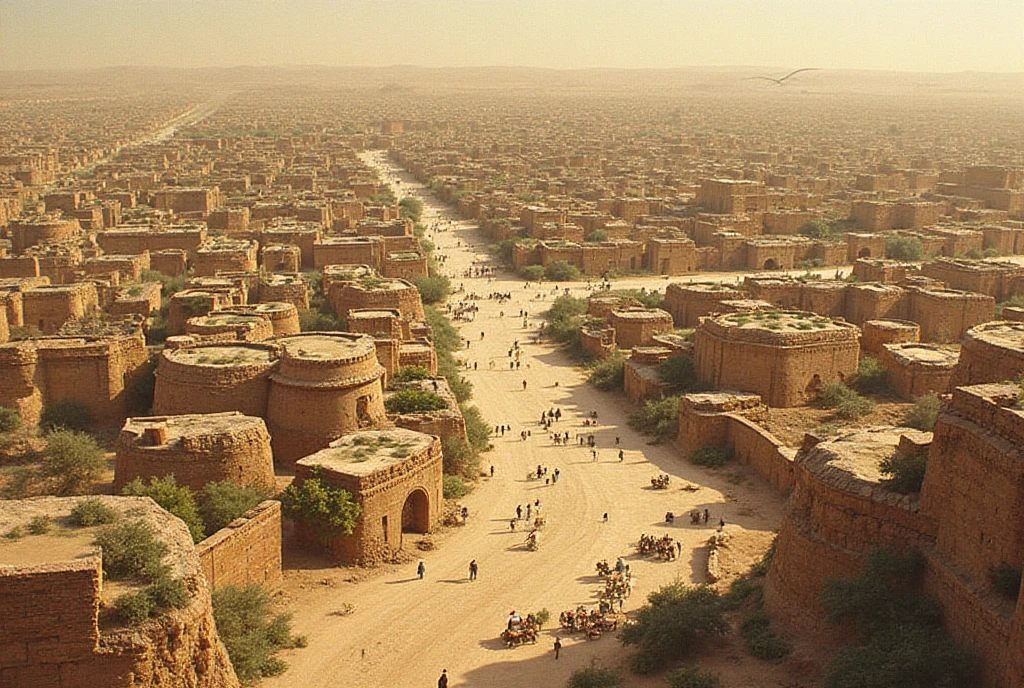
Unlike the irregular settlements of Egypt or Mesopotamia, Harappa and Mohenjo-daro were designed with mathematical accuracy. Streets were laid out in a grid system, running north-south and east-west, ensuring both symmetry and practicality. Houses were built with standardized baked bricks in the precise 4:2:1 ratio, showing a level of architectural control that suggests centralized planning.
Every household had access to clean water, and wells were dug within neighborhoods. The attention to detail extended to sanitation systems—covered drains ran along main streets, connecting to larger channels that carried wastewater out of the city. This was the world’s first known urban sewerage system, a feature modern cities only perfected thousands of years later.
Life Inside the Cities
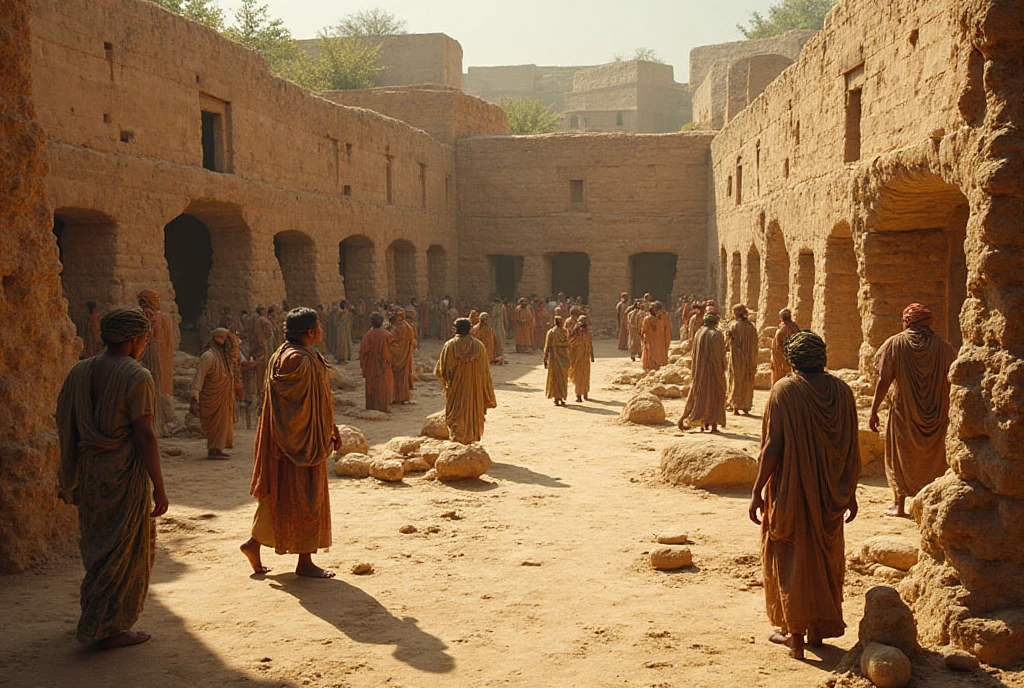
Archaeological evidence suggests that daily life in Harappa and Mohenjo-daro revolved around both comfort and community. Homes were typically two stories high, with private bathrooms and courtyards for light and air circulation. Workshops produced pottery, beads, textiles, and seals, indicating a thriving economy rooted in skilled craftsmanship and trade.
Markets likely bustled with merchants exchanging goods both locally and internationally. Seals found in Mesopotamia confirm that Indus traders engaged in long-distance commerce, exporting cotton, beads, and ivory in exchange for metals and luxury goods.
The Great Bath of Mohenjo-daro
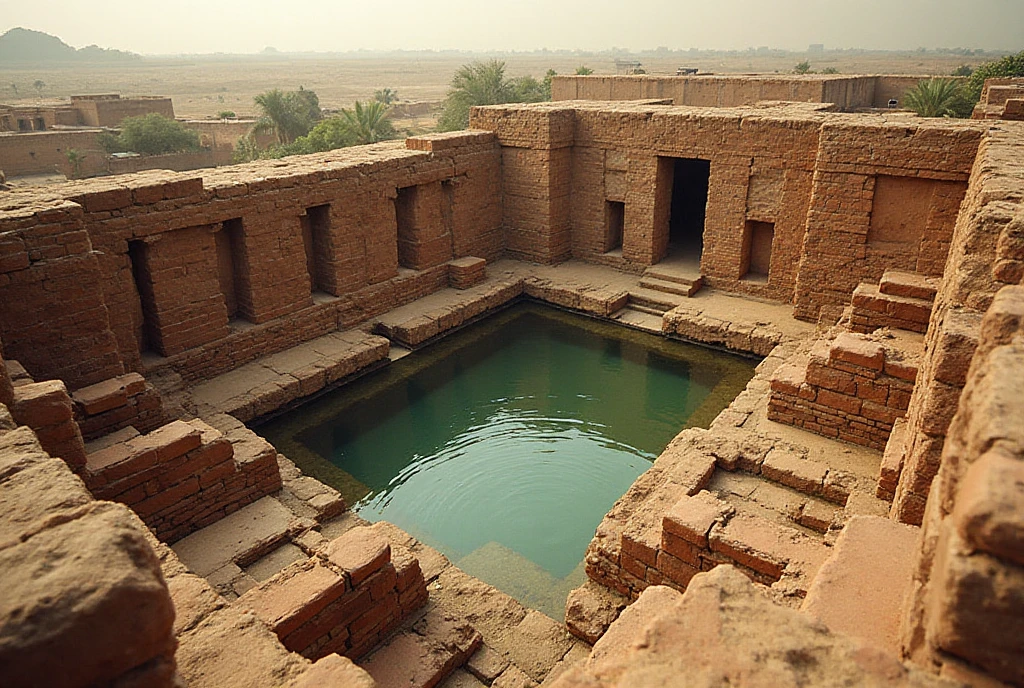
One of the most iconic discoveries of the Indus Valley is the Great Bath, located in Mohenjo-daro’s citadel. Built with carefully sealed bricks and lined with bitumen for waterproofing, it was likely used for ritual bathing and purification. The presence of such a structure suggests that water was not only practical but also spiritual—anticipating later traditions of ritual bathing in Hinduism and Buddhism.
A Society Without Kings
What makes these cities unique is the absence of palaces, temples, or monumental statues celebrating rulers. The largest structures were granaries for storing food and assembly halls for communal use. This contrasts sharply with Egypt’s pyramids or Mesopotamia’s ziggurats, which symbolized the power of kings and gods.
The evidence suggests that Indus society valued collective welfare over royal display. Authority existed, but it was exercised through organization and shared standards rather than personal glorification.
The Legacy of Harappa and Mohenjo-daro
By around 1900 BCE, both cities began to decline—streets went unrepaired, drainage systems clogged, and standardized craftsmanship disappeared. Yet even in their decline, they left behind a remarkable legacy.
Harappa and Mohenjo-daro represent a vision of urban life ahead of its time—where cleanliness, order, and equality shaped daily existence. Their silent streets, uncovered by archaeologists, remind us that greatness is not always measured in monuments to kings, but in how a society cares for its people.